Terraforming 101
This is the piece I'm reading for my terraforming episode. I'll have references and other useful information as I get to them.
Enjoy! Ben, 26/03/16
Terraforming is a process whereby an uninhabitable and
barren planet can be transformed into a place that supports earth-based life.
Why would we need to go to all this trouble? Why would
terraforming even be necessary in the first place? Look at terraforming as
something like transforming a barren desert into a green oasis.
We are surrounded by life here, and so take it for granted.
It really is everywhere. On a place like any other planet or moon we can think
of conditions are so harsh and hostile that no life (as we know it) can exist.
In order to render a planet like Mars fit for habitation by living things it
needs to be terraformed.
In order to take you through the basic concepts of
terraforming, I am going to walk you through the terraforming of the planet
Mars. Mars has been recognized as the closest planet to earth in terms of
composition and conditions, but to understand why Mars would have to be
terraformed it will be necessary to show you how Earth and Mars are different.
After Venus, Mars is our closest planetary neighbour. It’s
orbit around the sun is roughly two of our years, but the Martian day is almost
the same as ours, at 24 hours and 37 minutes. Mars has weather and seasons
which closely approximate those of Earth. Geologically and chemically Mars is
quite similar to Earth. Mars is also home to abundant water, just like Earth.
Beyond this, Mars and Earth become quite different.
Mars is approximately one third the size of Earth, with only
38% Earth gravity. Despite the fact that astronauts are spending longer and
longer periods in zero and very low gravity conditions, it is unknown if
prolonged periods of exposure to reduced gravity such as that on Mars poses
significant health risks.
Earth possesses a thick atmosphere, consisting of roughly 80
percent nitrogen and about 20 percent oxygen, with a few trace gases making up
the balance. The atmosphere of Mars, by contrast, consists almost entirely of
carbon dioxide, and has a pressure at the surface of less than 1 percent of
that on Earth.
Earth atmosphere is not unique in the solar system. Other
worlds and moons have been found to be wrapped in a thin veil of gas too. Even
tiny Pluto, only recently examined up close by astronomers, has its own thin
atmosphere. Mars was once believed to possess a much thicker atmosphere than it
has today. The reason Earth has retained its atmosphere to this day, and Mars
has not, is that Earth itself generates a strong and vigorous magnetic field.
The magnetic field is generated by an active metal core, which generates
colossal amounts of electromagnetic radiation. This magnetic field prevents the
earth’s atmosphere from being stripped away by constant bombardment from the
solar wind and cosmic rays.
Without an active core Mars produces no magnetic field. It
hasn’t produced one for several hundred million or billions of years. Any atmosphere
Mars once had was long since scrubbed away by Solar winds and cosmic rays,
leaving behind the very thin atmosphere it has today.
Mars is extremely cold. The average surface temperature on
Earth, barring extremes of temperature here and there, is 16 degrees Celsius or
61 degrees Fahrenheit. This is quite tolerable to most things living on earth
and this benign climate is one reason life has succeeded here. The average
temperature on Mars has been recorded above zero degrees, but on average Mars
is a giant freezer, with a surface temperature of -55 degrees Celsius or -67
degrees Fahrenheit.
For Mars to become hospitable to life, it is hence necessary
that it’s atmosphere becomes thicker, and that the planet is warmed up.
Presently no human being could survive on the martian surface without sophisticated
equipment, for example pressurized suits and breathing apparatus.
To render a place like Mars habitable is something that can
be done. But first, these issues of temperature and pressure need to be
addressed.
What are some ways of doing this? How the heck do we just
give a planet a thicker atmosphere? Is it even possible to warm a planet up in
a suitable time frame?
The answer is actually right under our noses.
We’ve been doing just these things for around two hundred years
now. In particular, for the last century.
One thing we’ve proven to be very good at is tipping the
balance of our own climate. The average temperature on Earth has risen by two
degrees Celsius. That’s a lot. Here on Earth humanity is heading for a crisis
if this climate change continues. On Mars, an artificially induced greenhouse
effect could be helpful.
Venus is an example of a planet which has been rendered
completely uninhabitable by a runaway greenhouse effect which has taken hold at
some point in the distant past. Venus today is a hellish world with surface
temperatures of 462 degrees Celsius or 864 degrees Fahrenheit. It is wrapped in
a thick blanket of heavy cloud and its atmosphere is 94 percent carbon dioxide.
Venusian air pressure is ninety-two times that of earth. The first probes sent
to Venus in the 1970s were crushed within minutes upon landing on the surface.
Venus is an example of how bad things could get. Mars just
needs a gentler nudge from us in order for its atmosphere to both thicken and
warm up.
There are several ways we could go about it.
On earth, aerosol sprays have been singled out as a source
of greenhouse gases. CFCs and PFCs (insert their full name on screen) are
propellants in almost every spray can on the planet. Things from hair spray,
insect sprays, cooking oils, and spray paint are all made possible by these
compounds, and they have been used widely in the last fifty years. In fact,
they’ve been used so much that they’ve put a big hole in our own protective
atmosphere.
Carbon dioxide is another greenhouse gas. Produced as a
waste product by every single animal on the planet, it is also pumped into our
atmosphere in vast quantities by industry and other sources of pollution.
Almost all mechanical transport on earth relies on hydrocarbon based fossil
fuels in order to function: oil and gas. Again, our vehicles all give off
carbon dioxide: a waste product resulting from internal combustion.
Pumping fluorocarbons into the Martian atmosphere in large
quantities would act to trap a lot of heat in the form of sunlight reflecting
off the Martian surface. This heat would eventually be enough to begin melting
mars’ polar ice. A lot of carbon dioxide on mars is locked up in the form of
dry ice at it’s poles. Should this ice begin to melt a huge amount of CO2 would
be released into the atmosphere. Not only would this crank out large quantities
of greenhouse gases and begin heating the planet, it would increase air
pressure.
One suggestion for adding to greenhouse gases in the Martian
atmosphere is the construction of factories designed to pump these gases: CO2,
methane and hydrofluorocarbons into the air. Over time, and by time I mean
decades or possibly centuries, Mars would become warm and wet once again, as it
once was.
Other suggestions for warming Mars include the introduction
of genetically modified bacteria, lichens and algae to the landscape. Studies
have shown that simple creatures like these are capable of surviving in harsh
conditions like those on mars. In fact, micro-organisms already exist that can
survive easily at very low temperatures, pressures and in toxic environments. They
are known as EXTREMOPHILES. It is thought that if these creatures were to
proliferate on the Martian surface they could contribute to the production of
greenhouse gases. An added bonus of having these organisms spread is that they
would reduce the reflectivity of Mars.
On earth, one factor in climate is albedo. Albedo is a
measure of how reflective the planet’s surface is. If albedo is high, this
basically means that a lot of sunlight (and thus warmth) is reflected back into
space. Regions on Earth such as polar or snow covered regions have a high
albedo for this reason, and it is one of the reasons they are so cold. Darker
regions on earth absorb more sunlight. Have you ever walked barefoot on an
asphalt road on a hot day? It’s really hot. This is because darker colours
absorb more heat, and it’s why we are often told to wear bright “reflective”
clothing in hot weather. Try it out for yourself one day when it’s hot. Try on
a white shirt and then a black or dark shirt. Which one do you think will be
hotter? The same principle applies to heating mars. If the surface could be
darkened by the introduction of dark material (dust, dark coloured organisms etc.),
this would go some way toward heating the surface.
However, this approach would be extremely slow by itself. It
is estimated that it would take at least centuries for darkening the surface to
have a noticeable effect on temperature. In conjunction with pouring greenhouse
gases into the atmosphere, this process may be sped up to sixty or seventy
years. However, in conjunction with other solutions things could be sped up
even more.
Arrays of giant mirrors placed in Martian orbit have been
proposed as a means of melting Martian ice caps. Reflecting sunlight from space
they present a fairly speedy solution to the problems both of adding pressure
to the atmosphere and providing liquid water, which would eventually form
lakes, rivers and oceans. Climate on earth is driven by heating and evaporation
of water. The presence of liquid water would allow introduced life from earth
to fare better and would also lead to a true Martian climatic system.
It is estimated that bombarding Mars with 10 1 billion tonne
asteroids rich in compounds such as ammonia would raise the surface temperature
by 10 degrees, as well as substantially contributing to air pressure. It would
introduce water, and indirectly oxygen into the atmosphere. The impacts
themselves would contribute heat. The ammonia in the asteroids contains
nitrogen, which makes up 80 percent of our own atmosphere. Many asteroids and
other astronomical objects such as comets contain vast amounts of water ice. This
would be an effective means of bringing water to mars. It has even been
suggested that much or all of the water on Earth came from outer space in this
fashion.
With present technology these solutions to terraforming mars
are within our reach, or will be soon. However, they are still all just a
start. Mars is still no use to us if we can’t breathe its air, right?
Well, oxygenating the atmosphere would require the introduction
of plant life. Plants would thrive on our hypothetical mars, where air pressure
has been raised to something approaching that seen on the tops of high
mountains. The atmosphere is now warmer and wetter, but still consists of
mostly carbon dioxide. Indeed, plants would thrive. But plants are not known
for moving quickly. Oxygenation of mars using plants in this manner would take
about ten thousand years.
But,
Other conditions are suitable for human life. With a
thin atmosphere and a now more suitable temperature range, humans would be able
to walk on mars without bulky space suits. They would only need oxygen masks
and canisters, similar to what mountain climbers use at high altitude on earth.
This in my opinion is significant progress. I can already imagine myself there!
It doesn’t have to stop at Mars.
Compensating for Mars’ lack of magnetic field will require
some creative thinking by science, but even a semi livable planet is a start.
Scientists have
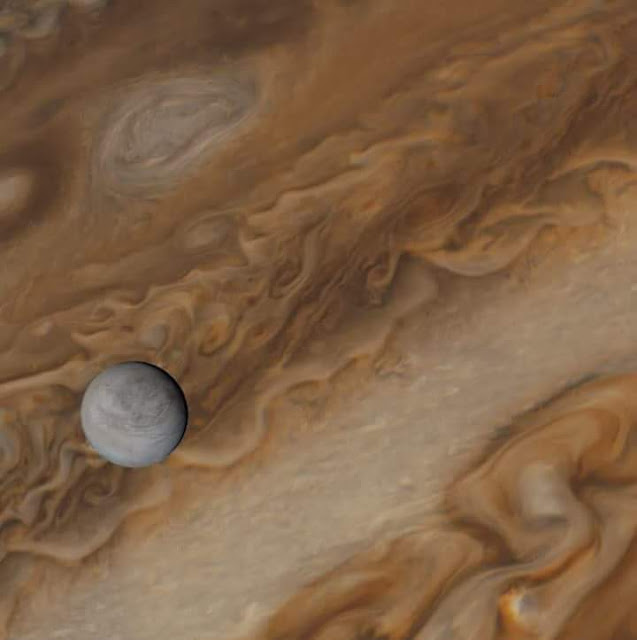
turned their attention to other worlds. The moon, Mercury, Venus, some moons of
Jupiter and Saturn. Each of these places would require a whole new set of
approaches. Different gravities, orbits, chemical compositions, weather
conditions mean that scientists and engineers would have to tailor an approach
for each world they come to.
Is terraforming even possible? I believe it is. That’s all I’ll
say on the matter. It will take time, money and effort. Perhaps another
question is this:
Is the level of cooperation and organization needed for nations
and governments to work together and transform a planet into a new home for the
human race even possible?
That’s a question science can’t answer. It’s up to you,
believing it can be done and working towards it.
I’ll finish with this. Transforming a planet will look easy
compared to transforming humanity. But I believe it’s possible.

Comments
Post a Comment